This source contains a collection of physics demonstrations tailored for university classroom lectures. The book is structured in accord with the so-called Physics Instructional Resource Association (PIRA).
How we Work
We consider our Demonstration Laboratory as a “shop” and we “sell” our demonstrations for free. We encourage professors to use our facilities and expertise. We need to encourage them because professors are not familiar with all the ideas available and they certainly have no time to investigate all the possibilities that exist.
we have many demos in stock
we know the physics
we know about didactics
we have theatrical experience
we have experience in designing demonstrations and conducting them
we know the literature and the ideas that are proposed worldwide and we keep up to date
we know what is commercially available
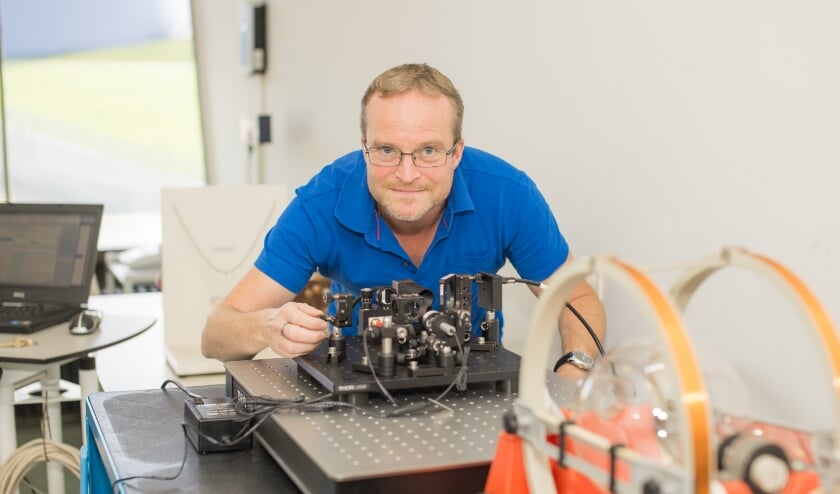
Ron Haaksman
How to Demonstrate
Ron is staff of the demonstration facility and his profession is to demonstrate.
We propose demonstrations to the professors and in consultation with them we select what will be shown. In developing, designing, and preparing the demonstrations we also make choices about how to show it effectively to our students. Finally we show the demonstrations during the lecture when it is the appropriate moment so it fits in with the matter taught during that lecture.
Currently (2025) we present around 300 demonstrations every year and this number is still increasing, because more professors see and experience the benefits of our services. Moreover also other faculties of our Technical University Delft and teachers from outside our university have found their way to our demonstration facility. Our Demonstration Room is a booming business!
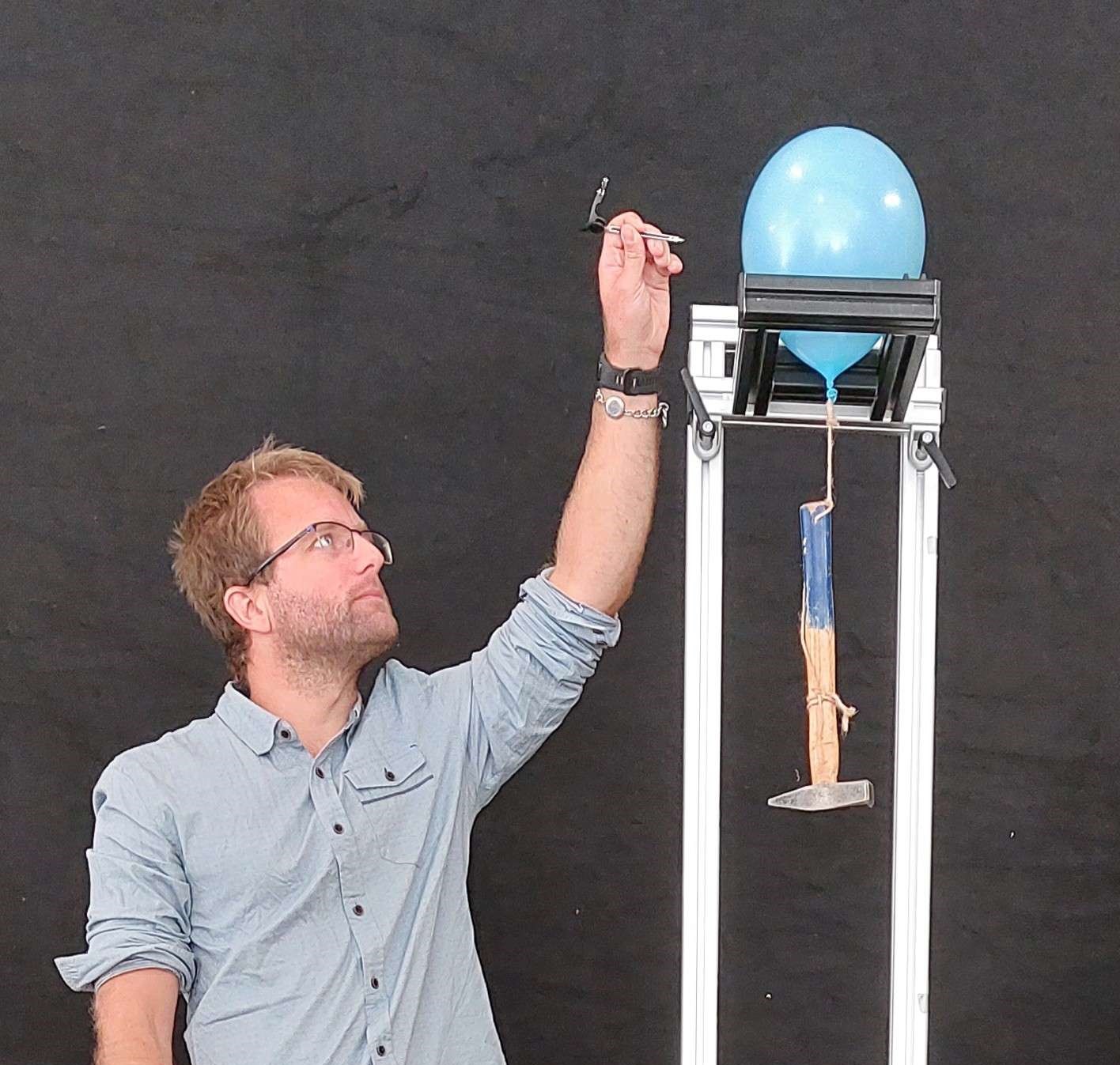
Freek Pols
Demonstrations
“How to demonstrate” means how to do it as effectively as possible and with “effective” we mean that students really learn from the presented demonstrations. Demonstrations are commonly believed to help students (1) learn science and to (2) stimulate their curiosity and critical thinking. The latter objective is generally achieved: studies show that demonstrations are among students’ favorite elements of a course. But research on the first objective also shows that traditional demonstrations do not effectively help students grasp the underlying scientific concepts or correct their misconceptions, while teachers often think the opposite. Here we refer to two studies:
“Why may students fail to learn from demonstrations?” Roth et al., 1997
“Classroom demonstrations: Learning tools or entertainment?” Crouch et al., 2004
These studies show that students who (only) passively observe demonstrations will understand the underlying concepts no better than students who do not see the demonstration at all! However, learning can be enhanced by increasing student engagement. The key to an effective demonstration is interaction with the audience. Students who predict the demonstration outcome before seeing it, display significantly greater understanding Crouch et al., 2004.
Three different approaches to demonstrations:
Observe:
students observe the demonstration
hear the instructor’s explanation
Predict:
students record their prediction (without discussion)
observe the demonstration
hear the instructor’s explanation
Discuss:
students record their prediction (without discussion)
observe the demonstration
discuss it with fellow students
hear the instructor’s explanation
At our department we apply the predict-method as much as possible. (The discuss-method requires too much time in our way of demonstrating). In the large lecture halls we question the prediction of the students before showing the demonstration. After a couple of minutes a multiple choice prediction is then presented to them. Then we show the demonstration and a short discussion follows.
- Roth, W.-M., McRobbie, C. J., Lucas, K. B., & Boutonné, S. (1997). Why may students fail to learn from demonstrations? A social practice perspective on learning in physics. Journal of Research in Science Teaching: The Official Journal of the National Association for Research in Science Teaching, 34(5), 509–533.
- Crouch, C., Fagen, A. P., Callan, J. P., & Mazur, E. (2004). Classroom demonstrations: Learning tools or entertainment? American Journal of Physics, 72(6), 835–838.