Aim
To show that the reflecting light ray in a corner cube is always parallel to the entering ray.
Subjects
6A10 (Reflection From Flat Surfaces)
Diagram
Equipment
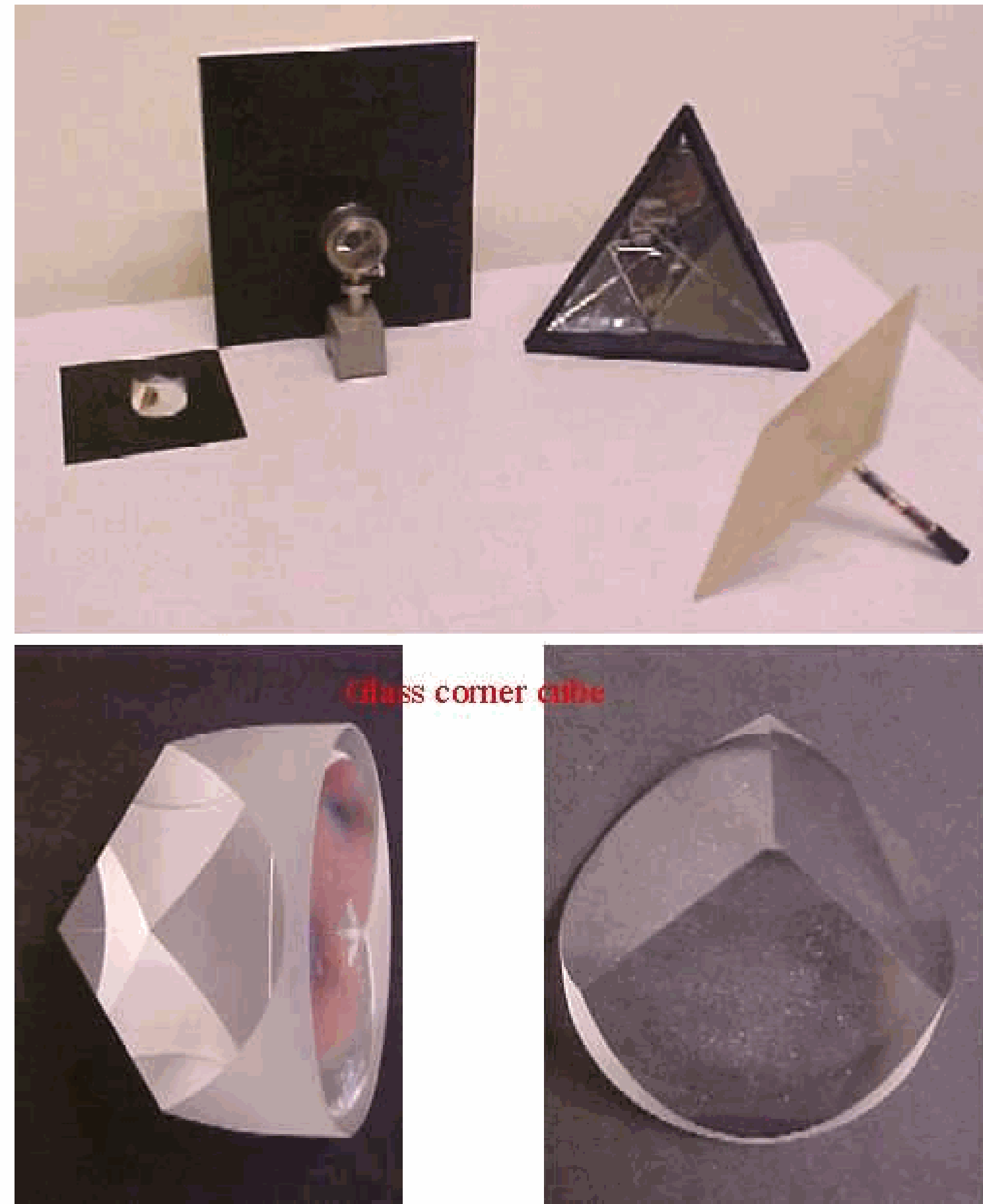
Prism corner cube, glass.
Prism corner cube in fitting.
Three planar mirrors arranged as corner cube.
Laser pointer fitted in transparent ground perspex.
Presentation
The objects are presented to the students. They are invited to look with one eye closed into the corner cube and move their head. They will notice that their eye remains caught in the center of the corner cube and that up-down and left-right are reversed.
Directing a laser beam towards a corner cube produces a reflection back to the laser pointer as reflection on the ground screen shows: the reflection is always parallel to the incident beam on the corner cube, It does not matter from which direction the laser beam is coming as long as it “sees” the three mirrors.
Explanation
In a planar mirror the image and object are equidistant from the mirror surface. But there is also inversion:
a right-handed coordinate system is converted into a left-handed one (see Figure 2).
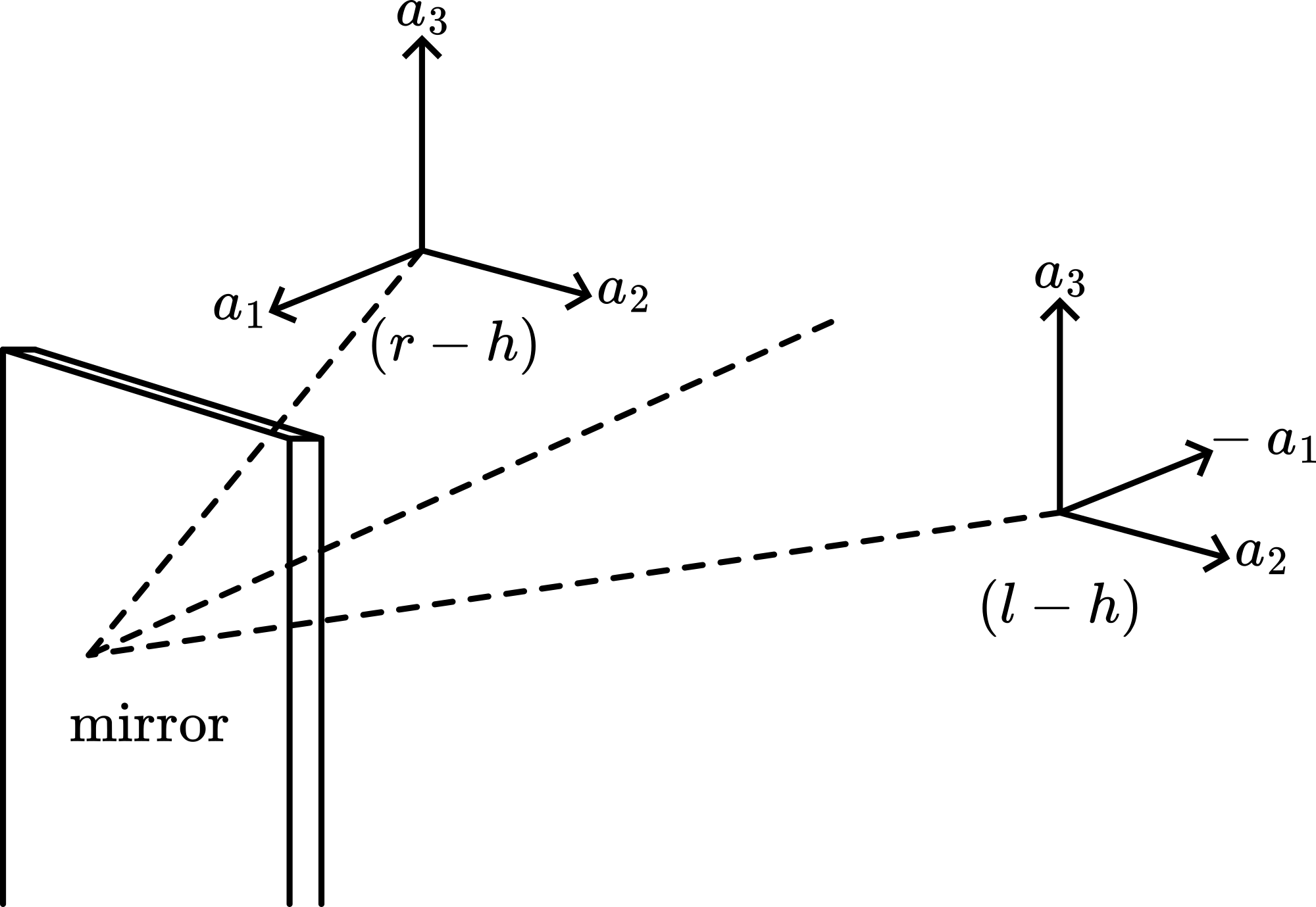
We see that after reflection has changed into , while and remain the same. Vector notation is applied to treat this.
Figure 3 shows that reflection in three mutually perpendicular mirrors will produce ray (vector) inversion. Three reflections occur:
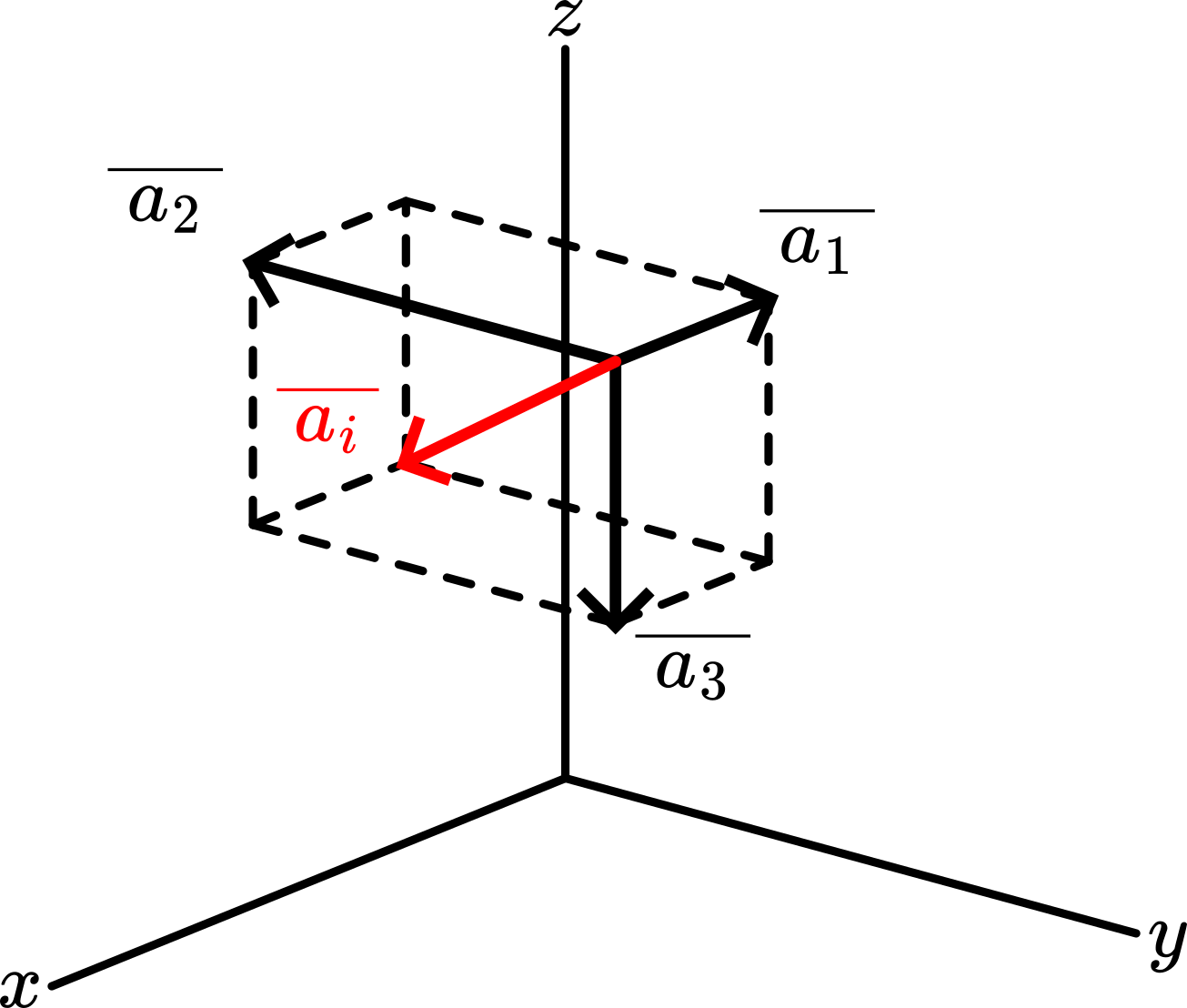
against -plane, changes into ,
against -plane, changes into and
against -plane, changes into .
So the finally reflected ray is . So the reflected ray is parallel to the incident ray.
Remarks
The principle that the resulting reflection is always perpendicular to the initial ray is used in an array of corner cubes on the moon. Together with a laser beam from earth the measurement of the reflection is used to calculate very precisely the distance from Earth to the Moon.
Sources
Hecht, Eugene, Optics, pag. 178-180 and 195
Stewart, J, Calculus, pag. 791 and 796