Aim
To show an example of energy conversion.
Subjects
4B60 (Mechanical Equivalent of Heat)
Diagram
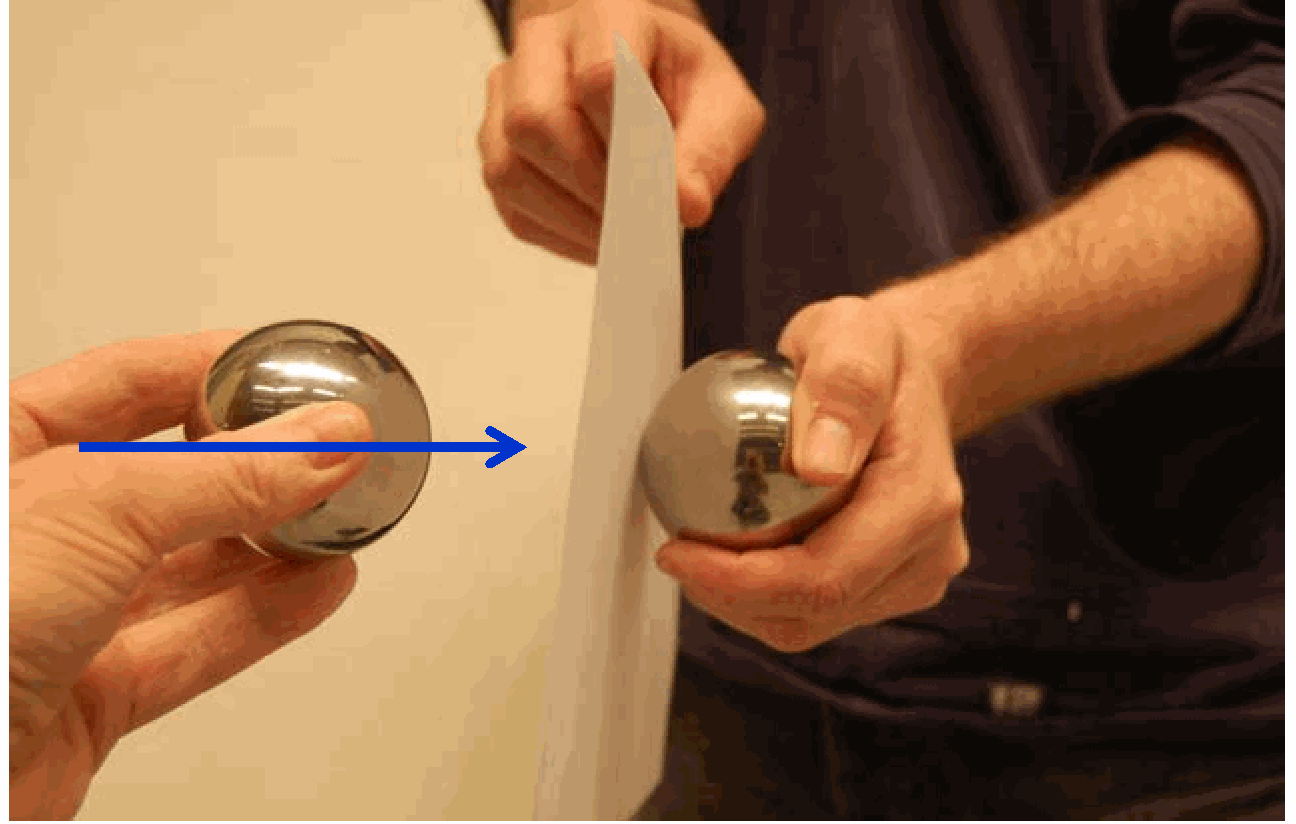
Equipment
Two large chrome steel spheres (we use spheres with a diameter of .
Sheet of paper .
Document camera.
Presentation
The two , chrome steel spheres are smashed together, while the sheet of paper is between them. At the point of contact a hole is burned in the piece of paper (see the enlarged Figure 2).
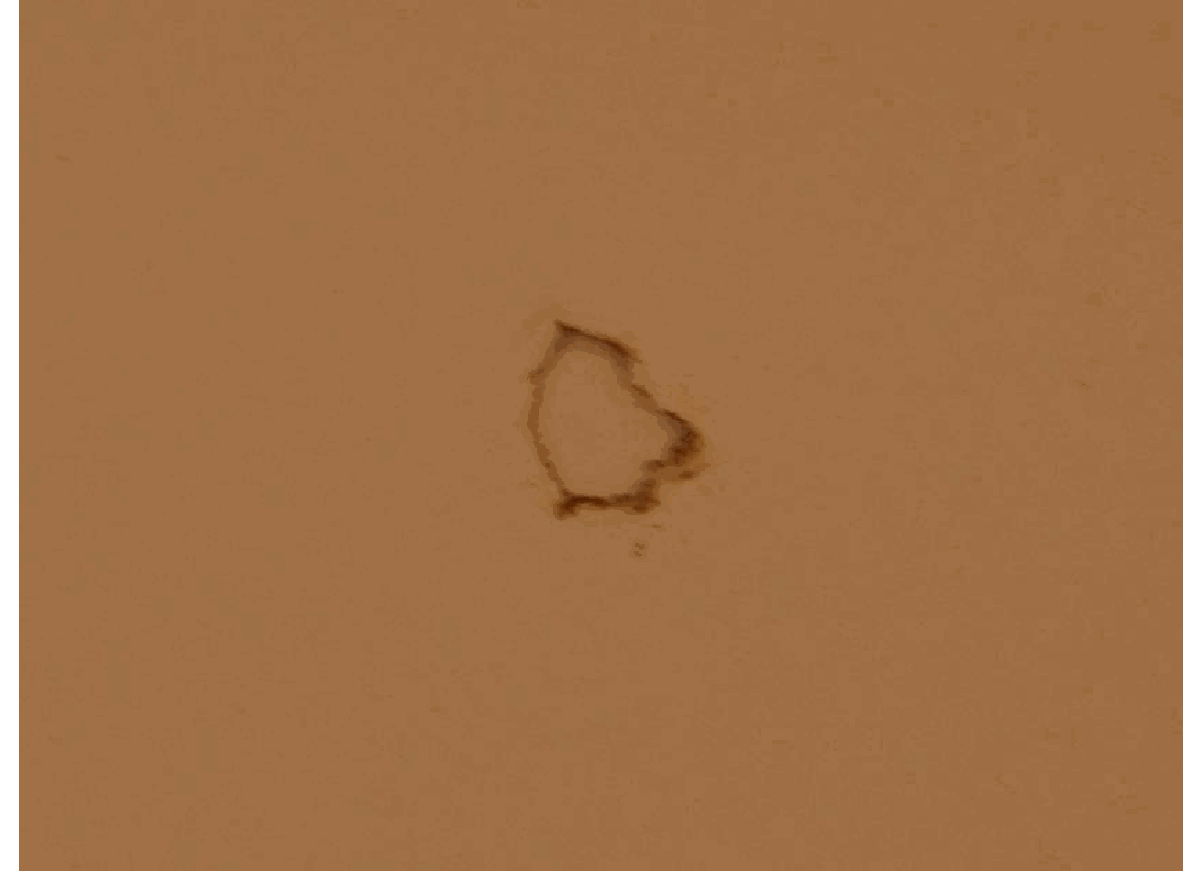
The demonstrator will smell the odour of burnt paper. Also a charred hole appears (see the brown rim in Figure 2). To convince the audience, this hole is shown to them using a document camera (is present in our lecture rooms).
Explanation
This demonstration just illustrates the conversion of mechanical energy into heat energy.
An easy calculation can give an estimate of the temperature rise:
Suppose just before hitting that the steel ball has a speed of . Then an amount of (kinetic) energy of oules can be transformed into heat.
The point of contact between the two spheres is very small. Suppose it has an area of around . Since the paper used is , the considered piece of paper between the two spheres has a mass of 0.8 milligram.
Now the local temperature rise of the paper between the spheres can be calculated, knowing that the specific heat of paper (c) is around , being the amount of heat that is induced without a loss by the transformation of the kinetic energy into heat. This leads to Kelvin.
Paper inflames at around (" 451 Fahrenheit"; Ray Bradbury), so the paper will certainly inflame (we suppose of course that all kinetic energy is transformed into heat into the paper with no losses).
This calculation is just an estimate. Supposing the area a little larger, for instance , will lead to a temperature rise of “only” 200 Kelvin. And this is not enough to inflame the paper.
Remarks
Give the spheres high speed! In practice we notice that the spheres need a high speed to produce the burning of the paper. When the speed is too low just a deformation of the paper can be observed. This experience shows that the estimation of temperature rise made in the Explanation is not too bad.
Video Rhett Allain
Video embedded from https://