Aim
To show that fast compression is accompanied by a considerable raise in temperature.
Subjects
4B70 (Adiabatic Processes)
Diagram
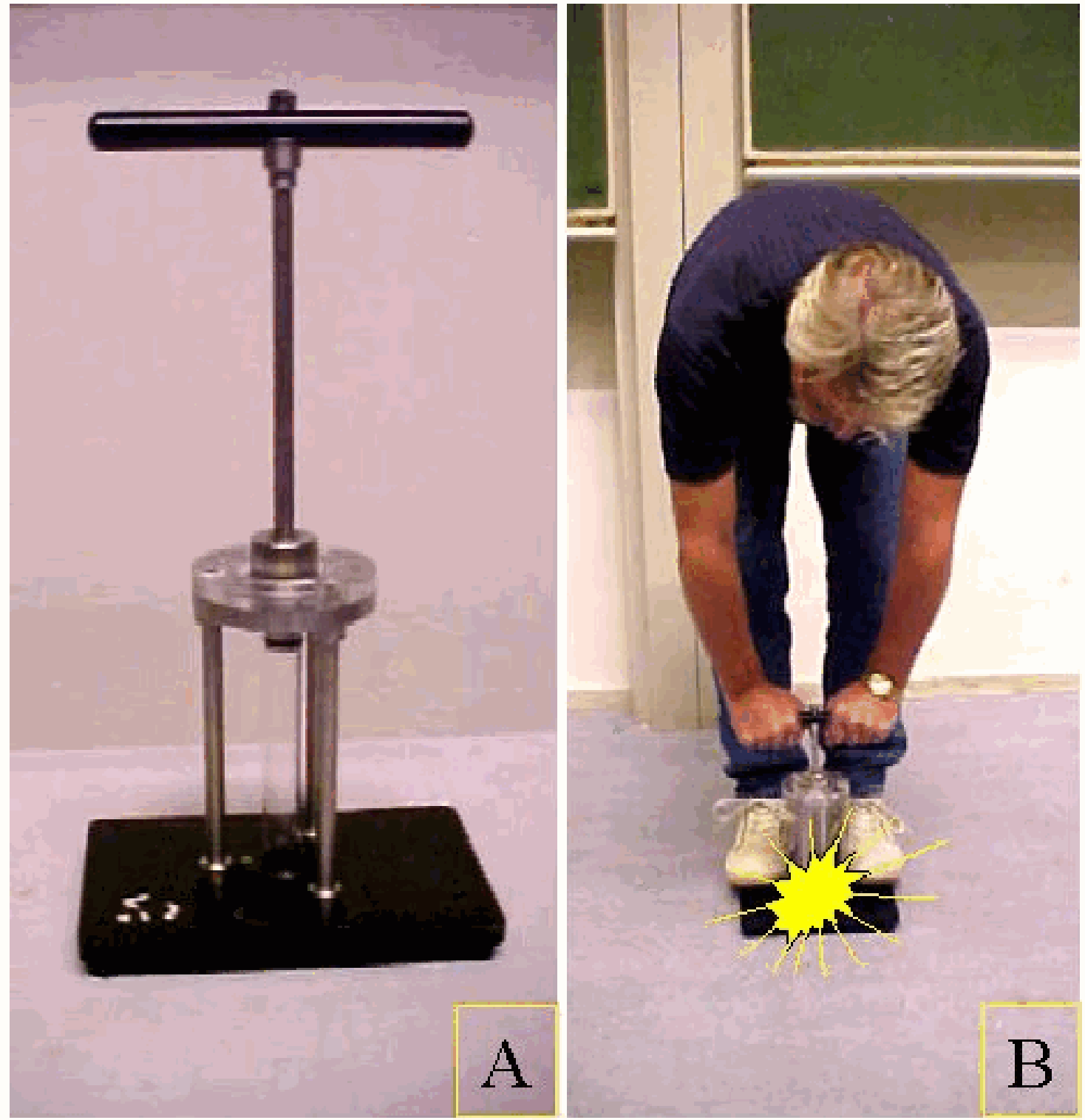
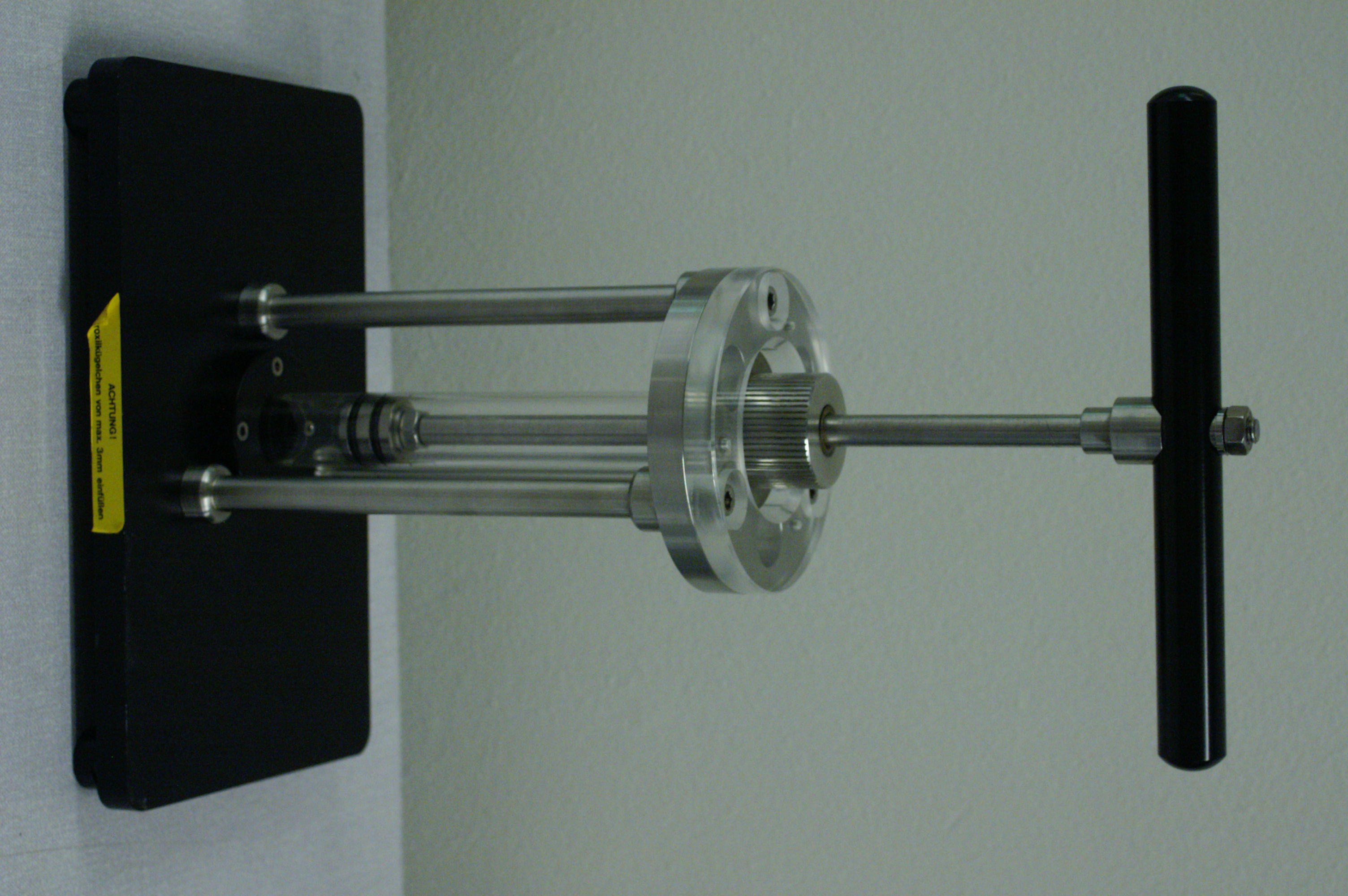
Equipment
Closed tube, fitted with plunger.
Pyroxyl wire.
Presentation
Small pieces of pyroxyl are put in the tube. The plunger is fitted into the tube and then pushed down rapidly. The pyroxyl lights and burns with a flash (see DiagramB). This points out to a steep increase in temperature.
Explanation
In general the process of the gas is polytropic, so: constant. In this demonstration the air in the closed tube is compressed rapidly, so during this action there is almost no heat exchanged with the surroundings. Such a process is performed adiabatically, and , giving constant. Rewriting this in terms of temperature gives: constant and so: .
When the compression ratio is around 6 and using air we have: .
. So starting at room temperature ( ), the air should heat up to around
Remarks
Hold the tube firmly, so that when you press the plunger downwards forcefully the tube doesn’t topple and break. We prevent toppling by standing on the foot of the construction.
When the flash occurs you can feel also the rise in pressure
We use pyroxyl wire, but you can also use small pieces of paper and/or the scrapings of a match. But do not use too much; more material means a higher heat capacity and as a consequence a lower temperature-rise of that material.
Sources
Mansfield, M and O’Sullivan, C., Understanding physics, pag. 279-281.
Meiners,H., Physics demonstration experiments, part 2, pag. 800.
Wolfson, R., Essential University Physics, pag. 297-299.