Aim
A cylinder sliding to a stop tips only if its diameter-to-height ratio is less than the reciprocal of the coefficient of kinetic friction.
Subjects
1K20 (Friction)
Diagram
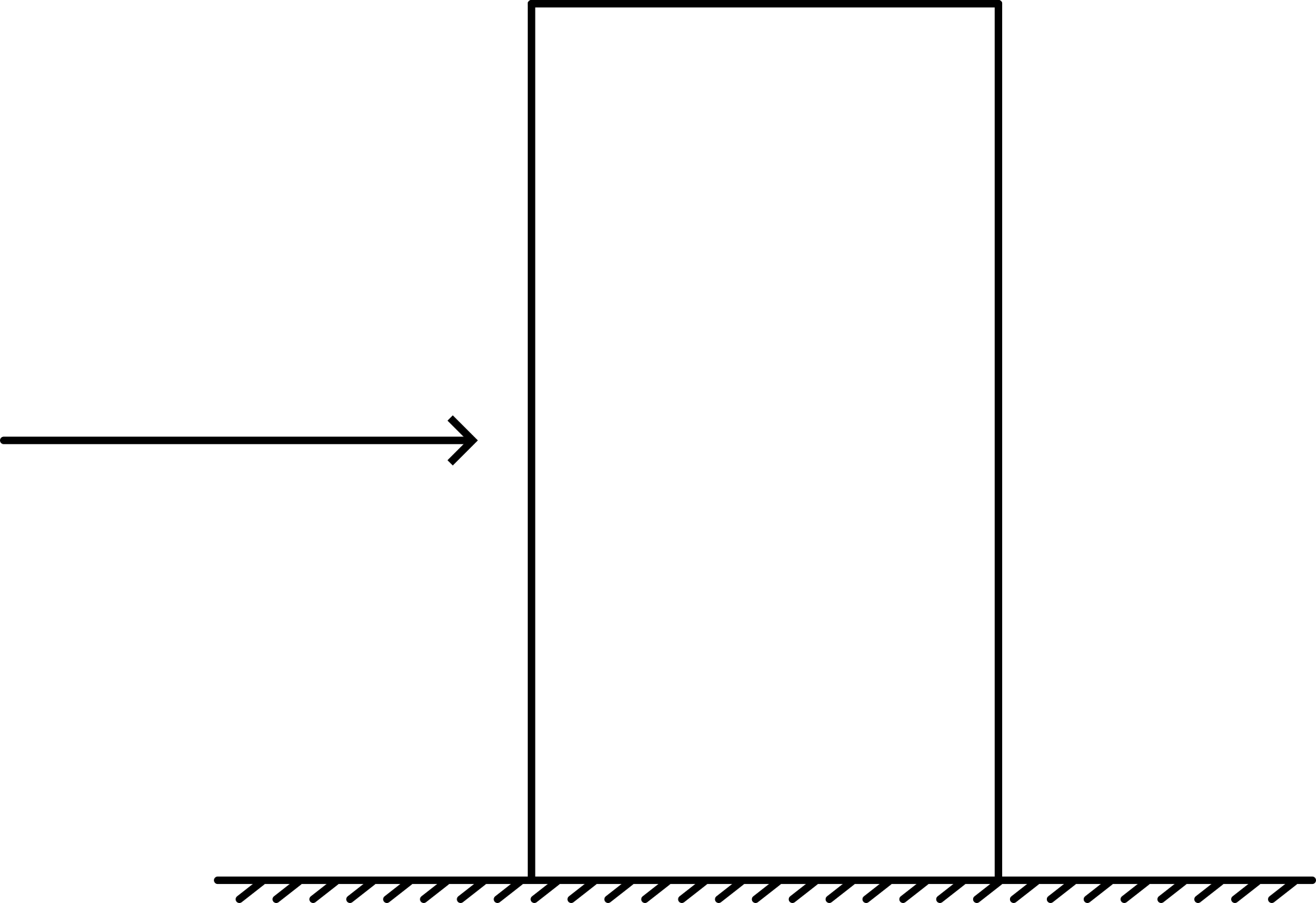
Equipment
5 pvc cylinders,
Horizontal surface (smooth table)
Presentation
The lateral standing cylinder is given a push by hand. (Push the cylinder on the bottom half, a number of times from left to right and vice versa).
Cylinder never tips, always tips, and tip sometimes/often ( tips roughly of the times).
Explanation
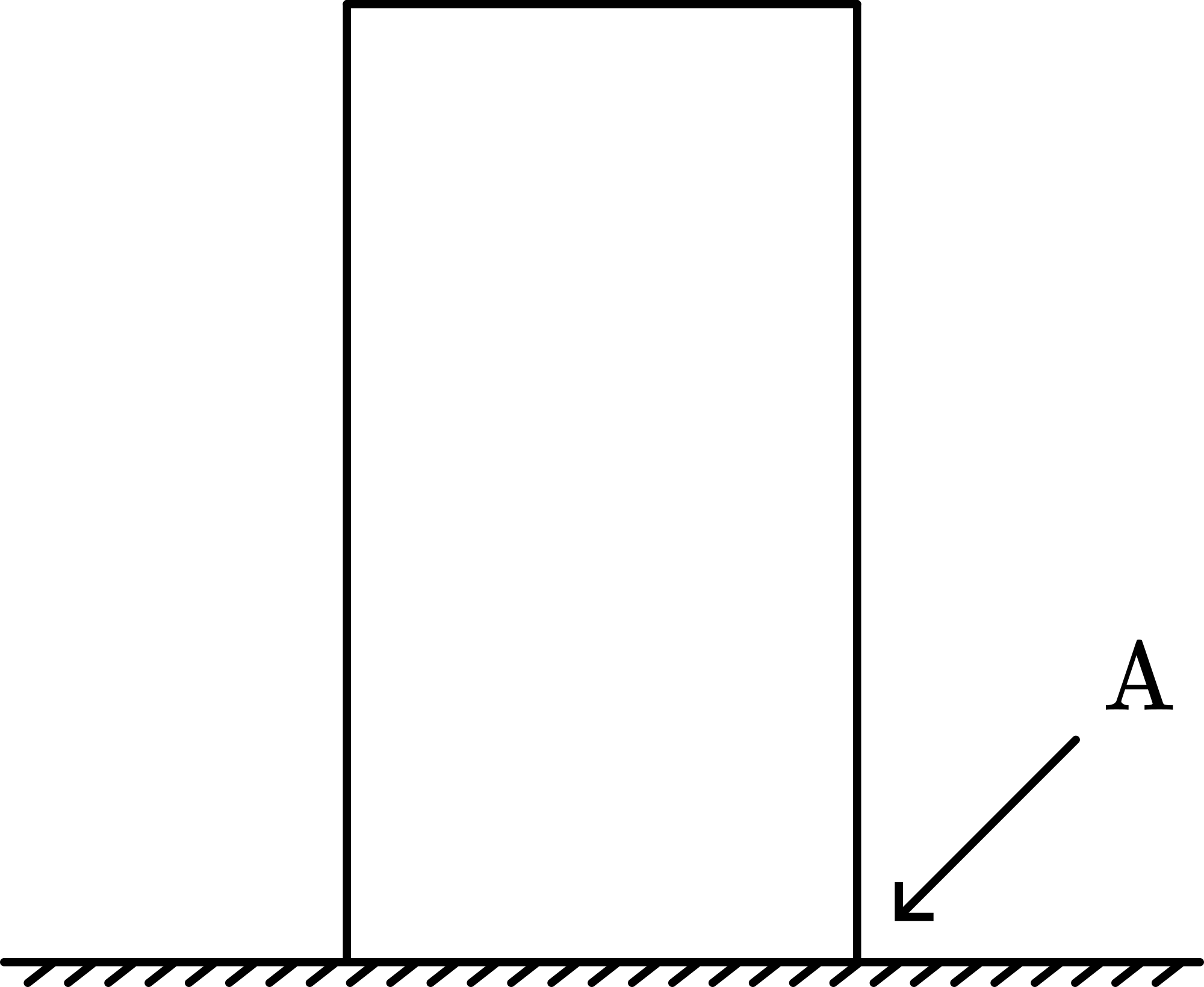
When the cylinder is about to tip over, the upward normal force acts at the leading edge of the base (Figure 1, point A).
In the decelerating reference frame, acts on the center of mass along with the vertical gravitational force (See Figure 3).
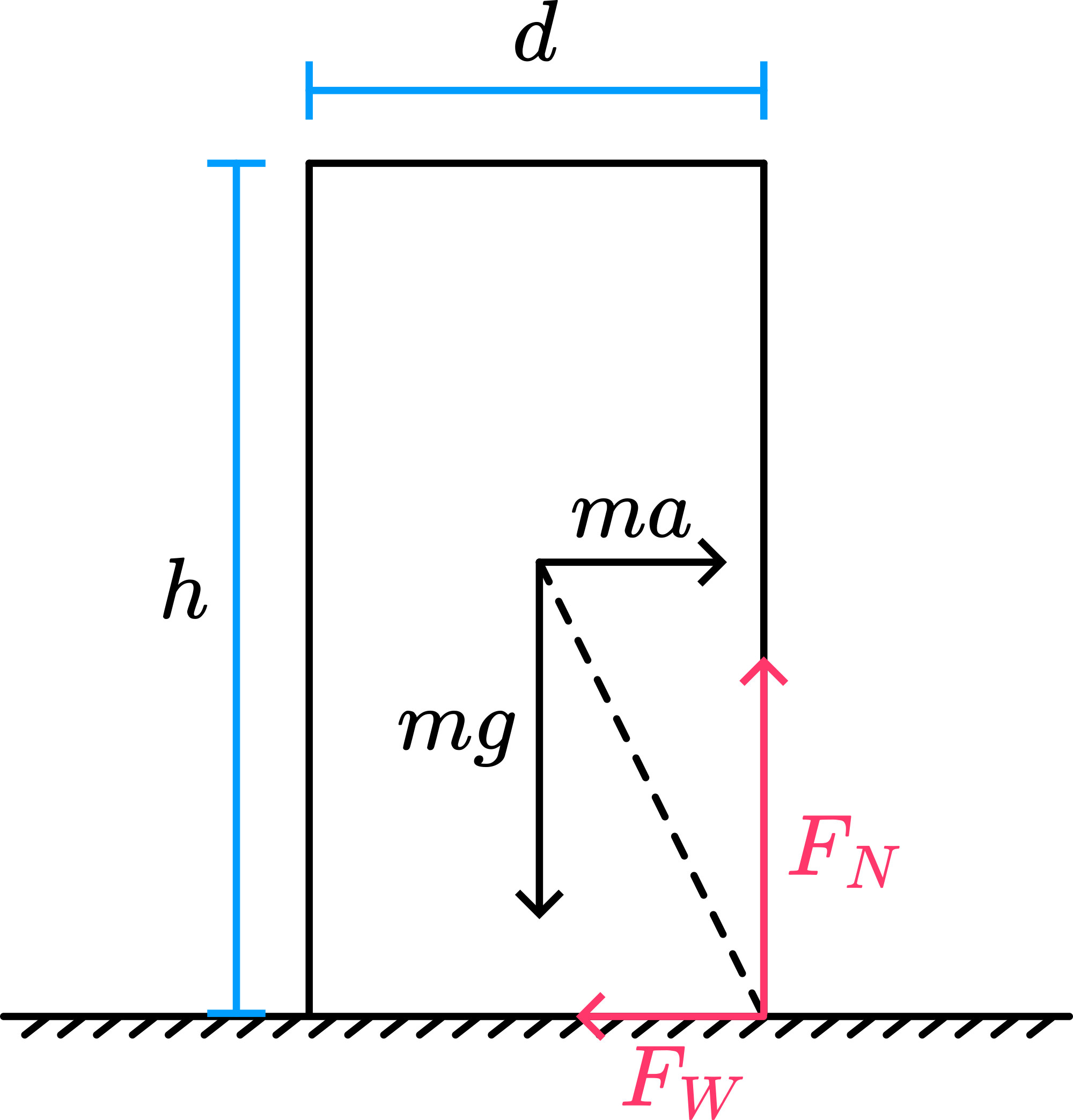
When the resultant of and is directed to point , the cylinder is on the verge of tipping. Figure 3 shows that in that case .
Remarks
Before you can cut the cylinder to the proper heights, we need to know the value of . can easily be determined by placing it on an inclined board and finding the angle of incline for which the cylinder slides at constant speed after being given a gentle push. ( angle of incline).
Sources
Ehrlich, Robert, Turning the World Inside Out and 174 Other Simple Physics Demonstrations, pag. 43
Friedrich, Artur, Handbuch der experimentellen Schulphysik, part 2, Mechanik der festen Körper, pag. 128