Aim
To show an example in which conservation of angular momentum explains the trick.
Subjects
1Q10 (Momentum of Inertia)
1Q40 (Conservation of Angular Momentum)
Diagram
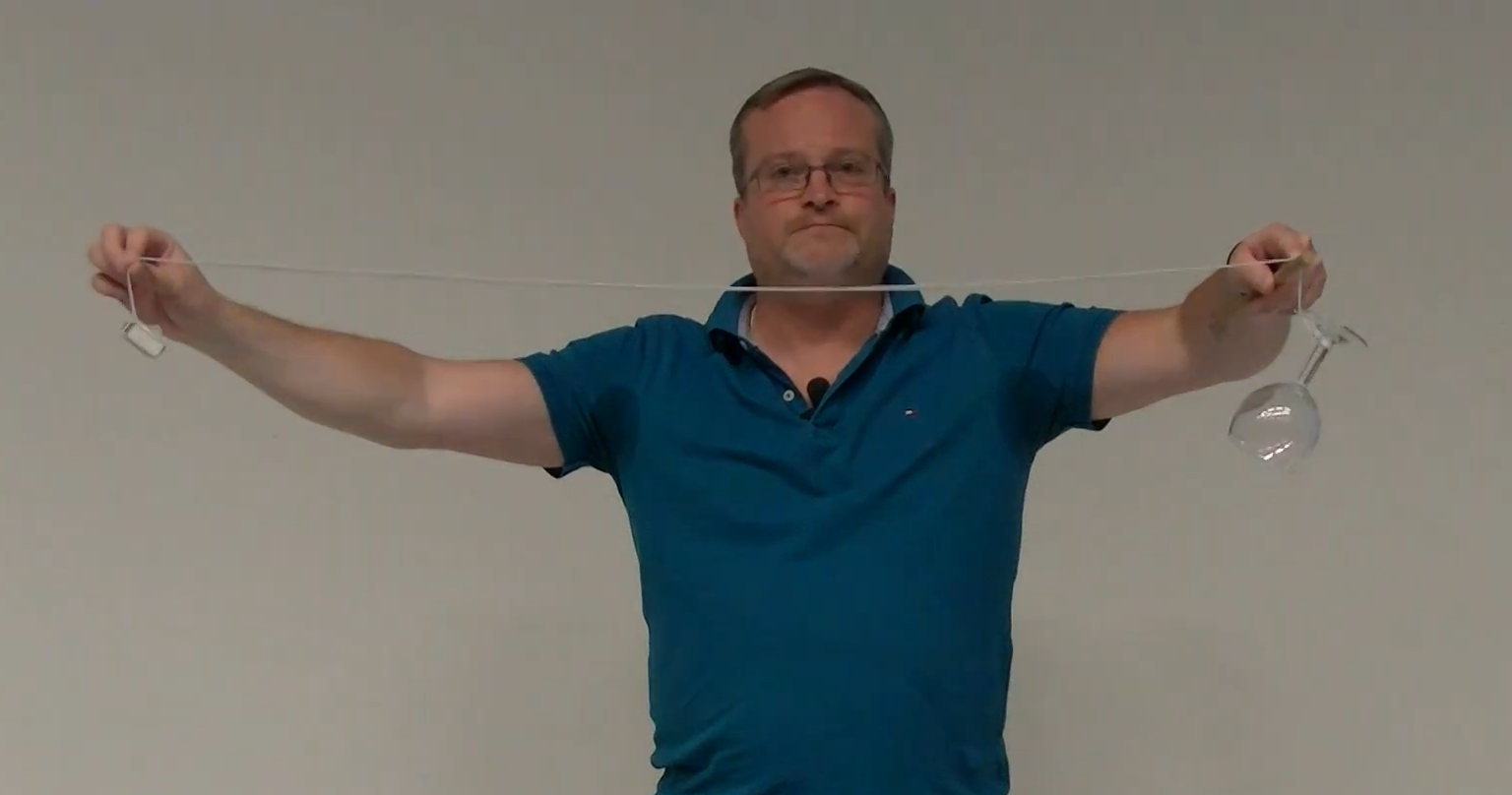
Figure 1:Ron demonstrating conservation of angular momentum.
Equipment
Heavy mass (wineglass).
String, .
Stick ( long).
Presentation
See Diagram. The wineglass hangs straight down a few centimeters below the pencil, the matchbox is held so that its string is nearly horizontal. Now release the matchbox and ... the wineglass will not hit the floor!
Explanation
As the heavy mass descends and pulls the light mass toward the pencil, the rotational speed of the light mass increases rapidly. This occurs for two reasons: first, because the mass swings like a pendulum; and second, because for a given angular momentum, a decrease in radial distance must result in an increase in angular speed. . Were it only due to the pendulum motion, the light mass would swing up only to its original height. However, because of the second mechanism increasing the angular speed, the string passes over the top of the pencil and wraps around it several times, creating a large frictional force. When the demonstration is repeated, the acceleration of the empty matchbox becomes clearly visible.
Remarks
We do this demonstration at the beginning of the lecture on ‘moment of inertia’, just to awaken students’ interest in the subject. At the end of the lecture an explanation follows.
Every now and then the demonstration fails because the matchbox hits the thread the wineglass is hanging to. The effect is that the wineglass hits the floor and breaks. So keep a spare wineglass at hand.
We always hope that the demonstration happens in this way: first a broken wineglass and next a perfect demonstration, because such a failed demonstration is better remembered by the students.
Sources
Acheson, D.J. and Mullin, T., Nature, Vol.366, vol. 63, nr. 9, pag. 854-855, Comment on “A surprising mechanics demonstration”, R.E.J. Sears
Ehrlich, R., Why Toast Lands Jelly-Side Down: Zen and the Art of Physics Demonstrations, pag. 74