Aim
Direction of rolling is determined by direction of torque.
Subjects
1K10 (Dynamic Torque)
Diagram
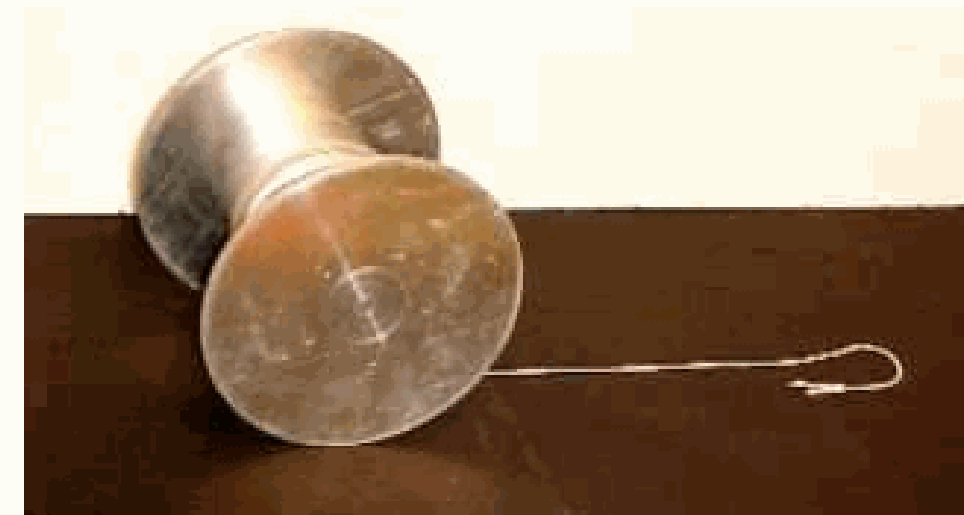
Equipment
A (large) spool of thread.
A thread or ribbon wound on the spool.
Pulley.
Mass, .
Presentation
Show the simple construction of spool and wound thread to the students. The demonstrator takes the end of the thread in his hands and wants to pull in a horizontal direction. Ask the students in which direction the spool will roll. After their answers, pull .... and the spool will roll into the same direction as the demonstrator pulls.
The thread is wound to the spool again. The demonstrator takes the end of the thread in his hands and wants to pull in an upward vertical direction. Again he poses the same question. After the students’ answers he pulls .... and the spool rolls into the other direction.
These two demonstrations induce the idea that it should be possible to pull in such a direction that the spool will not roll at all! Ask the students in which direction you need to pull the thread to get this situation. After their answers, experimentally search the right angle: the spool skids.
Explanation
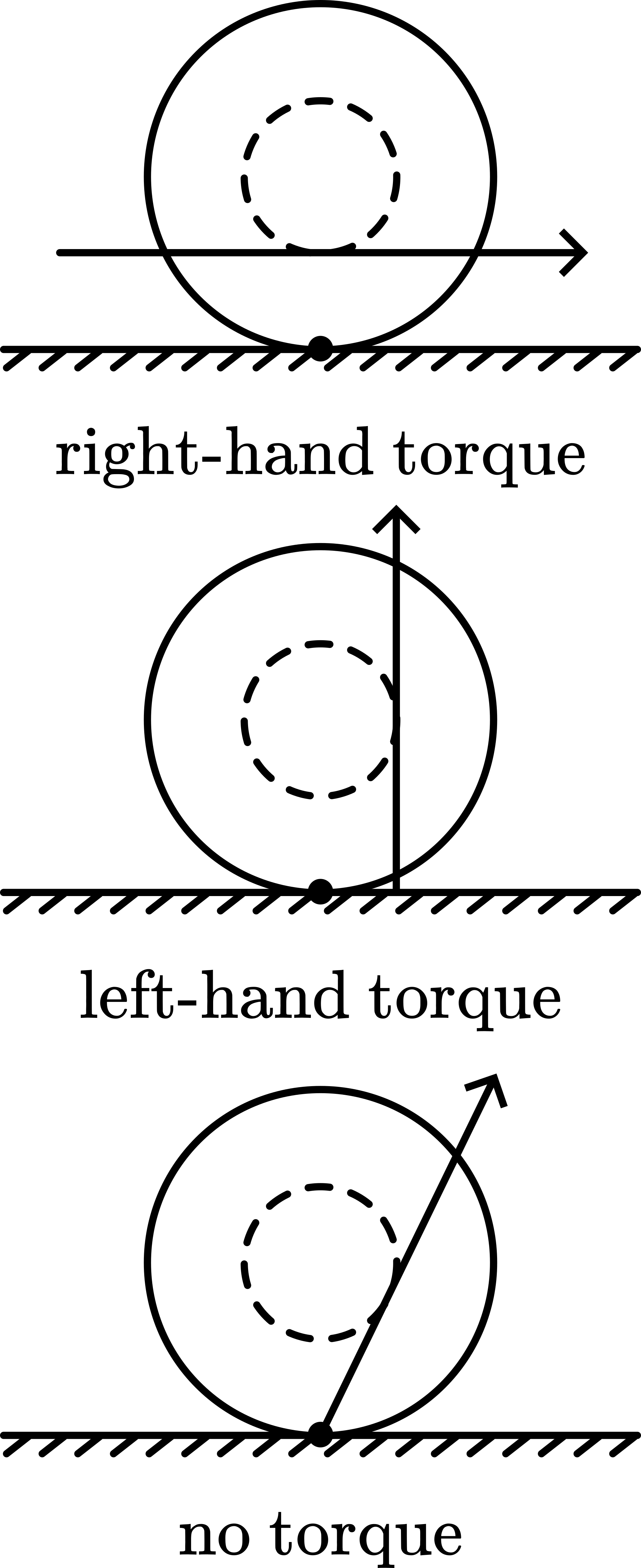
The direction in which the spool rolls is determined by the direction of the torque on the spool about the contact point. The critical angle is defined by extending the line of the pulled thread until it passes through the point of contact between the spool and the table. A force applied along this line produces zero torque about the contact point. (see Figure 2).
Remarks
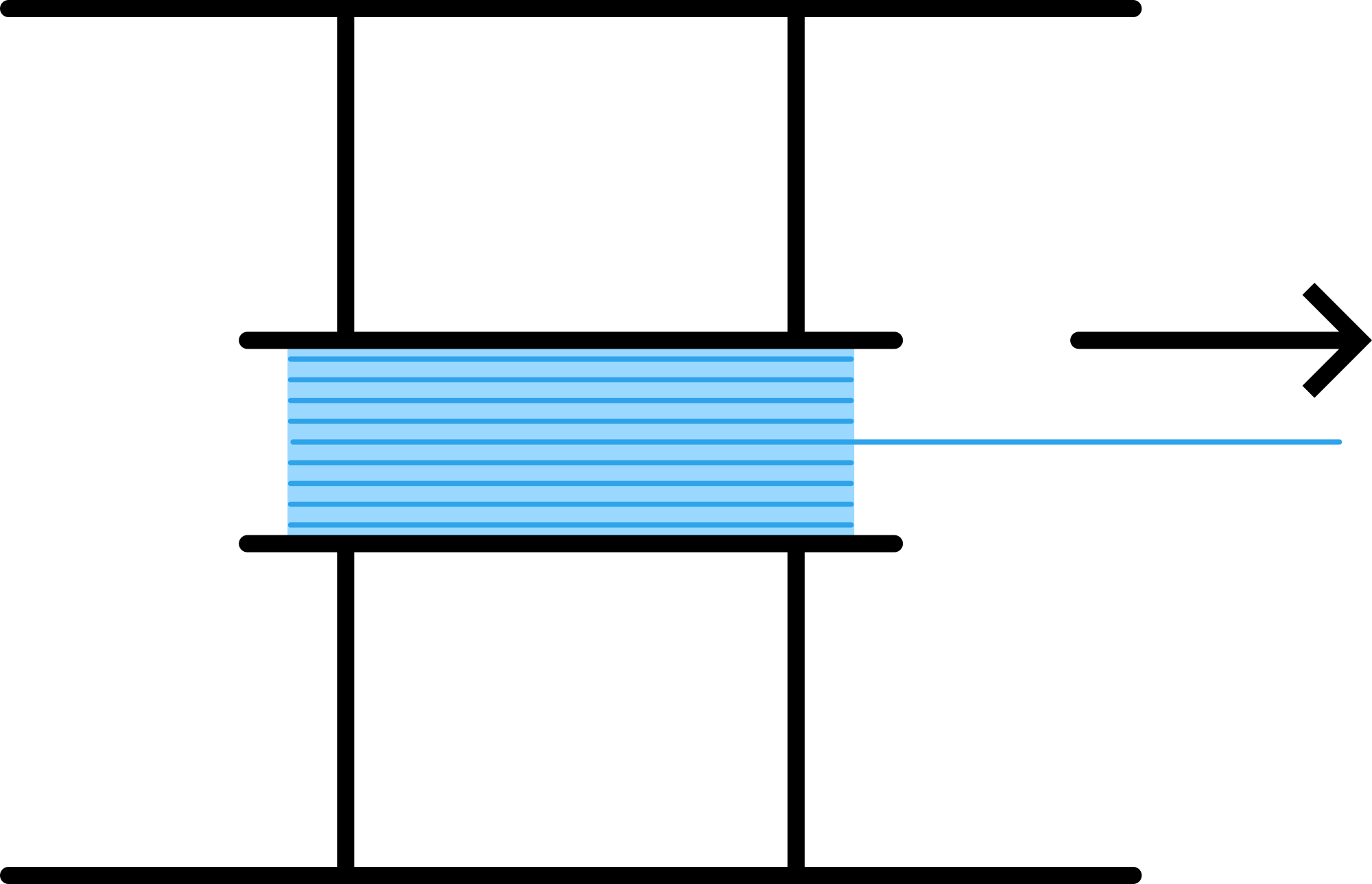
When pulling at very shallow angles, the spool orientation is not stable unless the thread comes off the spool at its center. This can be prevented by using a ribbon rather than a thread or using a large spool that is made in such a way that the thread can only be rolled in the centre of the spool (Figure 3).
A nice extension of this demonstration is to set the system up so that the string passes over a pulley and the force is supplied by hanging a weight from the end of the string (Figure 4).
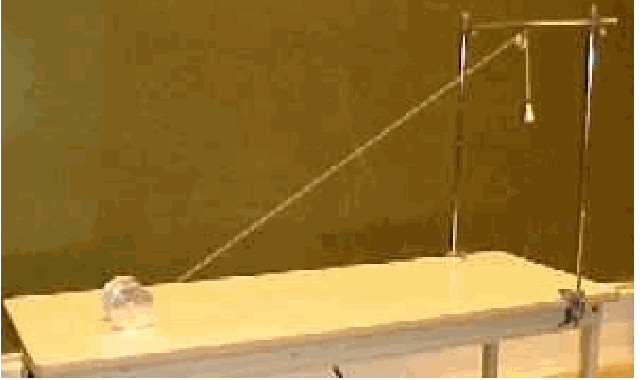
If the spool is moved away from its critical angle, the spool will always roll back to the position of the critical angle! It will oscillate back and forth around this equilibrium position.
Sources
Ehrlich, R., Why Toast Lands Jelly-Side Down: Zen and the Art of Physics Demonstrations, pag. 65
Jewett Jr., John W., Physics Begins With Another M... : Mysteries, Magic, Myth, and Modern Physics, pag. 115
Mansfield, M and O’Sullivan, C., Understanding physics, pag. 102
Young, H.D. and Freeman, R.A., University Physics, pag. 324(10-53)